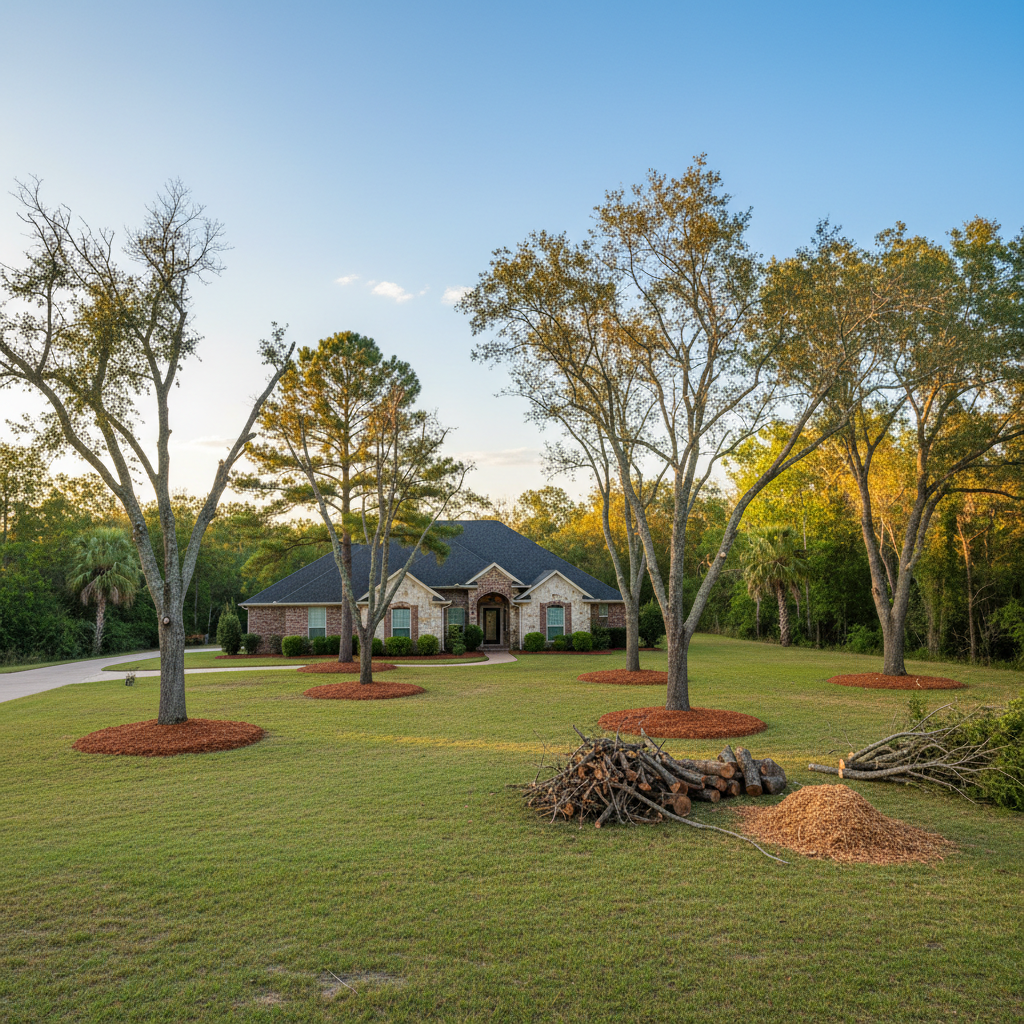
So, you've got some trees on your property, and you're starting to wonder if they're looking their best. Maybe a branch looks a little off, or the leaves aren't as vibrant as they used to be. Whatever it is, you're thinking about calling in a pro for some tree health and care. That's a smart move, really. But before you just pick up the phone, let's talk about what goes into a project like this, from your first thought to the final handshake.
Setting the Timeline: When to Plan Your Tree Care
When's the best time to tackle tree health issues? Well, that really depends on what's going on. For general health assessments, pruning, or even planting, late fall through early spring is often ideal here in New Caney. The trees are dormant then, which makes it easier to see their structure, and it minimizes stress on them. Plus, our summer heat and humidity can be brutal on freshly pruned or treated trees.
Now, if you've got a tree that's clearly sick or showing signs of stress – like sudden leaf drop, strange growths, or dead branches – don't wait. That's an immediate concern. A good arborist can diagnose issues year-round. For preventative treatments, things like deep root fertilization or pest control, timing is critical and often seasonal. Your arborist will know the best window for those specific tasks.
What to Expect: From First Call to Project Completion
Alright, you've decided to get some help. Here's what you can generally expect:
Initial Contact & Consultation: You'll call a company like All Star Tree Service. We'll set up a time to come out and look at your trees. This isn't just a quick glance, either; we're checking the overall health, looking for signs of disease, pests, structural issues, and assessing the tree's environment. We'll discuss your concerns and what you're hoping to achieve.
Proposal & Quote: Based on the consultation, you'll get a detailed proposal. This should outline the recommended services (pruning, disease treatment, cabling, removal, etc.), the scope of work, what equipment we'll need, and the cost. Don't be afraid to ask questions about anything you don't understand.
Scheduling the Work: Once you approve the proposal, we'll schedule the work. Depending on the season and the crew's availability, this could be a few days to a few weeks out. Emergency work, of course, gets priority.
The Work Day: On the day of the project, the crew will arrive. They'll confirm the scope of work with you, set up safety zones, and get to it. This can involve climbing, using lifts, specialized tools, and a lot of noise. They'll clean up all debris, leaving your property tidy.
Follow-Up: For ongoing health treatments, there might be follow-up visits. For one-time jobs, you'll typically get a final check-in to make sure you're satisfied.
How to Prepare Your Property for Tree Care
You can help make the process smoother for everyone. Before the crew arrives:
Clear the Area: Move anything valuable or fragile away from the work zone. Think patio furniture, grills, garden ornaments, kids' toys, bird feeders. If you have a vehicle parked close to a tree that's being worked on, move it.
Secure Pets & Kids: Keep your pets indoors or in a secure, distant area. Make sure children understand they need to stay clear of the work zone. This is for their safety.
Mark Sprinkler Heads/Utilities: If you have underground sprinklers or shallow utility lines near the work area, mark them clearly. While we're careful, heavy equipment can sometimes cause damage if we don't know exactly where things are.
Communicate: If you have any last-minute concerns or specific instructions, talk to the crew leader when they arrive.
And speaking of communication, let's talk about those critical questions.
Questions to Ask Before Signing a Contract
Don't just sign on the dotted line without getting answers to these. You're hiring a professional, and you deserve to feel confident in your choice.
Are you licensed and insured? This is non-negotiable. They should have general liability insurance and workers' compensation. Ask for proof, and call their insurance company to verify it's current. If they're not, you could be liable if someone gets hurt or something gets damaged.
Do you have certified arborists on staff? A certified arborist has demonstrated knowledge in tree care. They're not just guys with chainsaws; they understand tree biology and proper techniques.
Can you provide references? A reputable company will be happy to share contacts for previous clients. Call them!
What's included in the cleanup? Make sure it's clear who's responsible for removing branches, wood chips, and leaves. You don't want to be left with a mess.
What equipment will you be using? For big jobs, this might involve heavy machinery. Knowing what to expect can help you prepare your property.
What's the payment schedule? Do they require a deposit? When is the final payment due? Get it in writing.
What happens if there's unexpected damage? A good contractor will have a plan for this and be covered by insurance.
Taking care of your trees is an investment in your property and its beauty. By understanding the process and asking the right questions, you'll ensure a smooth project and healthy trees for years to come.